
The to-do list that maintains itself
Every meeting hands me a few more things to deal with, and on a packed day that adds up to dozens. So instead of feeding a tracker by hand, the system keeps one impact-ranked list that builds itself, arrives with the work already done, and closes items off on its own.
When I rebuilt my calendar around AI, the week settled into two shapes, long focused blocks for the work only I can do and a couple of dense operational days where all the meetings stack up. Most of what I have to act on comes out of those dense days. Every meeting hands me a few more things to deal with, an email someone's waiting on, a decision I owe, and on a packed day that adds up to dozens. Most of them aren't hard, but there are too many to hold in my head, and the ones I don't handle right away end up eating into the days I keep for real work.
There's no shortage of tools for this, and I've used plenty of them. They all fail the same way, they only work if I keep feeding and pruning them by hand, and that upkeep is the first thing to go when the schedule gets this dense. What I wanted to explore was one that runs itself, and that was easy to hand off, because the requests already come in through the same inputs the system reads. Every email that wants something from me, every commitment that comes out of a meeting transcript, is flowing in anyway. So instead of me checking my inbox, then the notes from each meeting, then trying to hold the rest in my head, the system pulls every real request out of all of it and keeps one list, scored by impact, so the high-stakes work sits at the top and the busywork sinks. Nothing drops, because I'm not the one holding it together. I never add to the list and I never sort it, and by the time I look it's already current, built all day while I was in meetings.
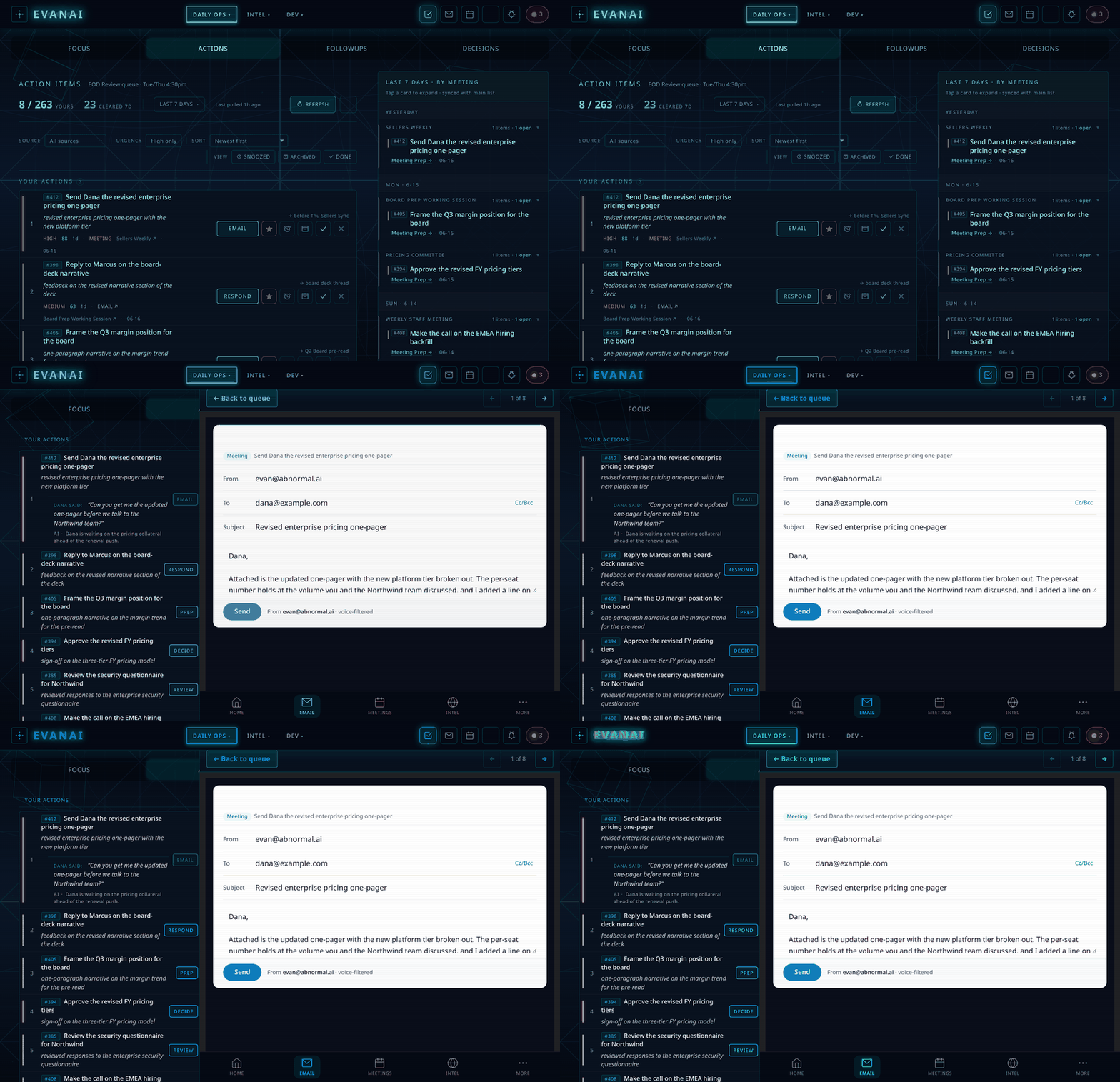
On top of catching everything, the work on each item is mostly done before I get to it. Each item shows up sorted by type and tagged with where it came from, with the next step already taken. If it needs an email, the draft is written in my voice with the context loaded, so I read it, change a line if I want, and send, or take a different tack with one tap, since the alternatives are already drafted underneath, the way I wrote about a few posts back. If it belongs in a meeting I have coming up, it gets routed onto the prep page for that meeting as a talking point instead, so I send nothing and just see it when that meeting starts.
A chunk of it isn't even work for me. A fair amount of what comes out of a meeting is administrative, the kind of thing that only exists to make another meeting happen. I said I'd set up the offsite dinner, move a recurring 1:1 to monthly, get a working session on the calendar. The system flags those from the wording, and instead of parking them on my list it writes the request to my executive assistant. The meeting that needs to exist gets created, and all I did was approve a two-line note.
Items I've already handled come off the list on their own. When a later transcript or a sent email shows a promise got kept, the system closes that one and drops it off, with the evidence attached in case I want to check. So the list only ever shows live work, never buried under the pile of things I already finished.
What I'm owed, kept separate
Running next to all of that is a second, shorter list, the things other people owe me. I'm not doing those, I'm tracking them, so that one is ordered by how long each has been sitting rather than by impact. Whatever someone promised me two weeks ago is at the top, and clearing it is one click on a nudge that's already drafted. This is the part a good chief of staff owns, so nothing I'm waiting on slips while I'm looking elsewhere.
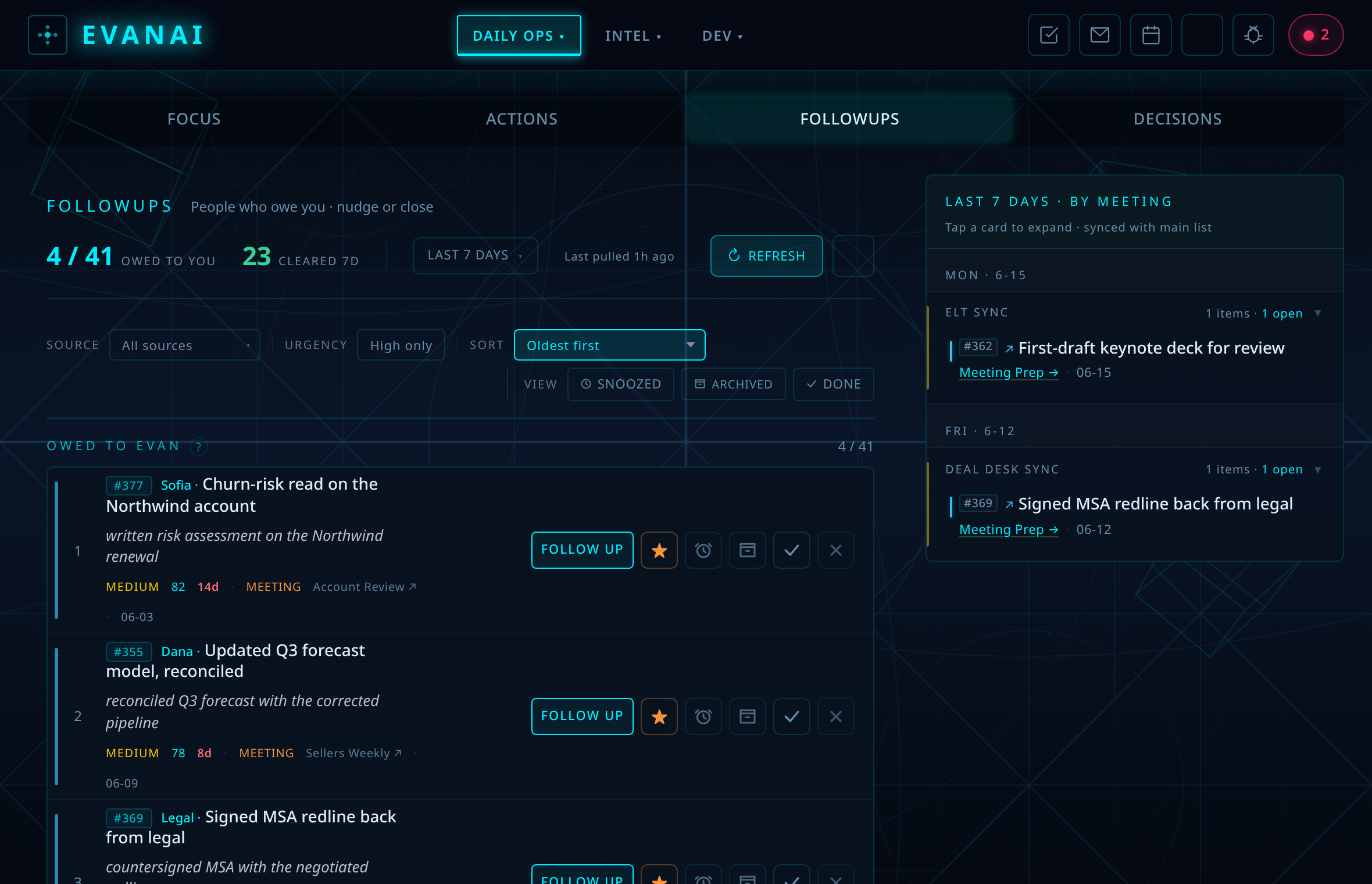
The calendar work freed up the hours, and this self-maintaining list is what keeps the small stuff from eating those hours back. I generally spend less than a minute on each item, read it, send it or pass it on, and move to the next, so the whole list clears in one short sitting. Handling everything I owe costs me a few minutes in one pass instead of pulling at me all day, and the rest of my time goes to the work that actually needs me.
-Evan
Previously in AI × CEO: Putting a number on it